The terminal never sleeps between tides, but it does have a clock
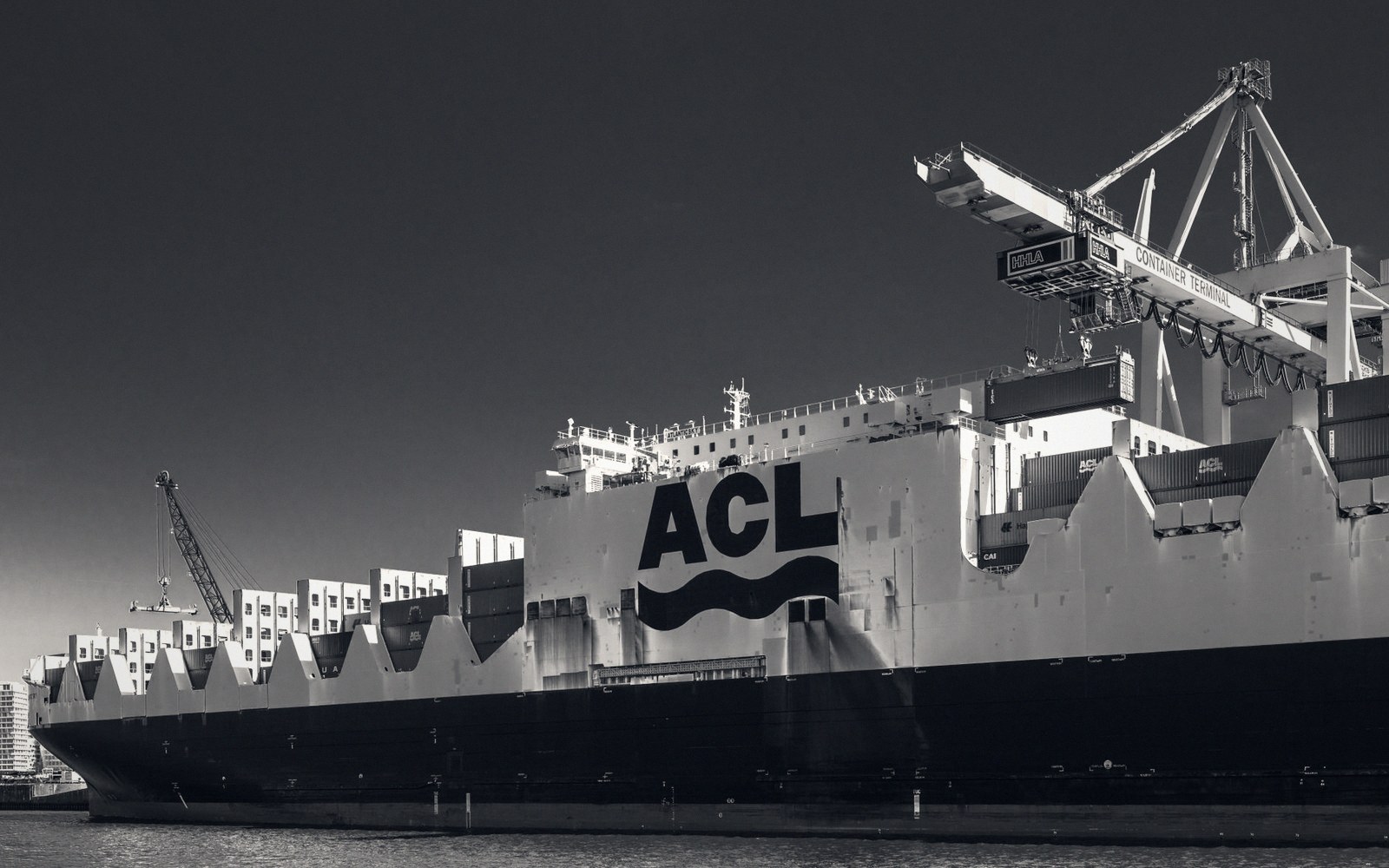
A container terminal seen from the road looks chaotic: cranes jutting over the water, yellow straddle carriers threading between stacks of boxes, trucks queuing at gates, a vessel sitting low and still against the quay. The impression is of organised clutter. It is actually a tightly sequenced production system running against a single hard constraint — the ship is in port, and every hour it spends there costs money that runs to tens of thousands of dollars. The whole choreography of the terminal floor exists to reduce that time. The unit the industry uses to measure whether it is succeeding is the move.
A move is one lift: a box picked up or set down. Crane productivity is measured in moves per hour, per crane, per shift, and the figure a modern, well-run terminal aims for is somewhere north of twenty — closer to thirty at the best-performing operations in Rotterdam, Singapore or Busan. That number sounds abstract until you follow a single box from the ship's hold to its position in the stack and understand everything that has to go right, in sequence, in the right order, for that box to count as one move completed.
From cell guide to crane spreader
The ship arrives pre-planned. Before it enters port, the terminal has received a bay plan — a digital diagram of every container on board, identified by position code. The code has three components: bay (the athwartships slice of the hold, numbered from bow to stern), row (the transverse position across the ship's width, numbered outward from the centreline) and tier (the vertical position, from the bottom of the hold upward). Position 020406, for instance, means bay 02, row 04, tier 06. The terminal's planning system knows, before the gangway is rigged, exactly where every box is sitting.
Below deck, containers stow inside cell guides — vertical steel angles welded to the ship's frames that hold each stack of boxes in a rigid column, preventing lateral movement at sea. When the crane's spreader — the rectangular steel frame that locks onto the four corner castings of a container — descends into the hold, it is lowering into a geometry that has already been mapped. The operator, sitting in a cab sixty metres above the quay or, in some terminals, controlling the crane remotely from a building onshore, aligns on the target cell, locks onto the corner castings with twist-locks, confirms a positive lock signal, and hoists.
That hoist takes about ninety seconds from pick to clear-of-hatch. It is the most constrained part of the sequence, because only one spreader can work in a single bay at a time. The crane then traverses out over the quay — the trolley running along the crane's horizontal boom — and lowers the box onto whatever is waiting below. What is waiting below is the next variable in the system.
The floor logic
Under each crane, the quay apron is a strip of pavement perhaps thirty metres wide between the ship's side and the landward edge of the crane's rail. This strip is where the handoff happens, and managing it is where terminal choreography becomes genuinely complex.
The box comes off the crane onto a vehicle — in most major terminals this is either a straddle carrier or an automated guided vehicle, depending on the terminal's equipment philosophy. A straddle carrier is a high-framed machine that straddles a container, picks it up from ground level using a lifting frame, and drives it to the stack. It is slower than a horizontal transporter but can pick and stack autonomously, without needing a separate crane at the stack. An automated guided vehicle, common in newer terminals in Hamburg, Rotterdam and some Chinese ports, is a flat-bed platform that carries the box to the stack but cannot lift it — a separate rail-mounted or rubber-tyred gantry crane at the stack does the final placement.
Either way, there is a gap between the ship crane's delivery point and the stack, and filling that gap without allowing the crane to wait is the terminal's core scheduling problem. The crane produces boxes faster than any individual vehicle can clear them. So the terminal runs a fleet — the number varies with terminal size, but a ratio of three to four vehicles per ship crane is common — and the terminal operating system, a software layer that can track every asset on the floor in real time, assigns each box to a specific vehicle and each vehicle to a specific position in the crane's landing sequence. The operator does not choose; the system dispatches.
The stack itself has an address — a block, row and tier in the yard — assigned by the planning system before the box leaves the ship. That address is not arbitrary. It reflects when the box is due to leave: a container trucked out tomorrow morning goes near the top of a stack near the gate; a box transhipped onto another vessel next week goes deeper in a block closer to the quay. Placing boxes correctly the first time matters enormously because re-handling — lifting a box to reach another — is a move that produces no revenue and eats directly into the crane's effective rate.
What sets the pace
Gross crane productivity is the headline number posted on terminal benchmarks. It counts every move the crane makes, including repositioning moves and pauses. Net productivity strips those out and counts only productive moves against the ship. The gap between the two is a measure of how well the floor is running. At a terminal where the vehicles are always ready and the stack addresses are pre-planned to minimise re-handles, the gap narrows. At a terminal where vehicle dispatch is slow, stack planning is poor or a technical fault has taken a gantry crane out of service, gross and net can diverge sharply.
The single biggest interruption to crane productivity is the hatch change. A container ship's deck is divided into hatches — the steel covers over each hold — and a crane working one hatch must pause, move the spreader to a staging position, wait for the hatch cover to be removed or replaced by a deck gang, and then re-engage. On a modern large containership, with multiple hatches and cranes working simultaneously, sequencing hatch changes so they do not all fall at once is part of the pre-arrival planning. A badly sequenced call can shave five or six moves per hour off the gross rate across the whole berth.
Weather matters but less than most outsiders assume. Wind is the real constraint, not rain. A spreader holding a forty-foot container presents a large area to a crosswind, and above a threshold — typically around twenty knots across the quay — crane operators slow or suspend work because the pendulum effect on the suspended box makes accurate landing impossible. Rain degrades visibility and affects traction on the apron but rarely stops operations outright.
Night shifts run at the same target rate as day shifts. The quay is lit to near-daylight conditions under the working cranes, and because the modern terminal operating system is managing dispatch and stack addresses continuously, the human operators — crane drivers, vehicle operators, yard supervisors — are executing the system's instructions rather than making real-time routing decisions themselves. The judgment calls, such as they are, mostly happen in the planning office in the hours before the ship arrives.
The number that matters at the end
When the last box has been discharged or loaded and the crane is lashed down and the ship's deck crew begins singling up the mooring lines, the terminal logs the berth productivity for that call: total moves divided by total crane hours, and total moves divided by total port hours, which includes the time from first line to last line. The second number is the one the shipping line watches. It captures everything — the time to rig gangways, to connect shore power if used, to shift a berth if a longer vessel was blocking — not just the time the cranes were running. A terminal that lifts twenty-eight moves per net crane hour but takes two hours to get the cranes working after arrival is not as efficient as that headline figure suggests.
Shipping lines rank terminals partly on this number. Capacity, draft and port costs matter too, but a vessel operator choosing between two ports that can physically handle their ship will factor in how fast the call is likely to be. Speed of turn affects vessel scheduling across an entire rotation — a ship that consistently loses two hours per call against its schedule compounds that deficit around the world. The terminal, in that sense, is not just moving boxes. It is managing time for vessels whose calendars are set months in advance.
The twenty moves an hour — or twenty-five, or thirty — is therefore not a boast. It is the minimum expected output from an expensive, permanently staffed, capital-intensive machine. The terminal floor runs precisely because the alternative, at any scale, is a queue of ships waiting at anchor, and idle ships are the industry's most visible and least recoverable form of waste.