The Problem with Empty
A ship without cargo sits too high in the water. The hull that was designed to be partially submerged now rides with its propeller half-exposed, thrashing air as much as water, and its rudder losing grip. The centre of gravity climbs toward the deck; the vessel becomes stiff and snappy in a swell, rolling sharply rather than slowly, which stresses the structure and exhausts the crew. An unloaded ship is not a ship at rest — it is a ship in a precarious condition that has to be corrected before it moves anywhere.
The correction is ballast: seawater pumped into dedicated tanks built into the ship's double bottom, her wing tanks, and often her fore and aft peak tanks. The water is heavy — roughly 1.025 tonnes per cubic metre in salt water — and it goes exactly where the naval architect calculated it should, pressing the hull back down to a working draught and restoring a stable centre of gravity. On a large bulk carrier, the ballast water carried on a ballast voyage may itself weigh tens of thousands of tonnes.
Filling, Trimming, and the Table
The officer responsible — typically the chief officer — does not simply open the valves and flood the tanks. The ship must be trimmed: adjusted so that the stern sits slightly deeper than the bow, which keeps the propeller submerged and gives the rudder authority. Too much trim by the stern and the bow rises dangerously clear of the water; too little and the propeller cavitates. The target is a narrow band, specific to the vessel's length and hull form.
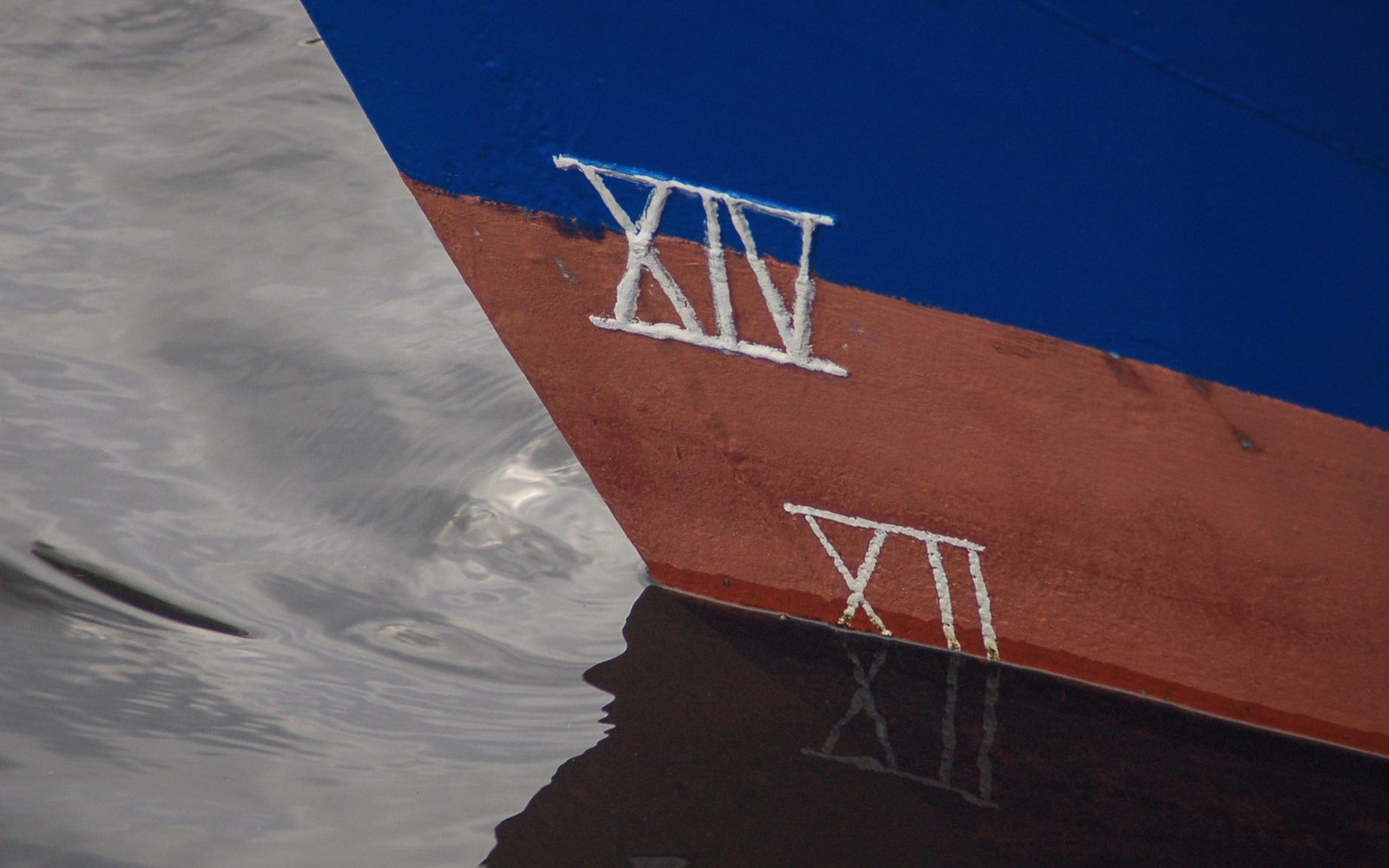
The trim table — a document derived from the ship's stability booklet — maps every combination of tank filling against the resulting draught at bow and stern, the list (sideways tilt), and the metacentric height, which is the number that summarises how readily the vessel will return upright after a roll. The officer reads the table, selects a ballasting sequence, and works the pumps in stages, checking draught marks at the hull between each stage. It is methodical, slow, and not optional.
What makes ballast invisible to the outside world is simply that the ship is carrying it rather than earning freight on it. The tanks are below the waterline, the work is done in the machinery spaces and at the ballast control panel, and the result — a vessel that handles safely at sea — looks exactly like an empty ship doing nothing. It is not doing nothing.