The Glass Wall Between Watching and Working
The main engine of a large bulk carrier or containership produces noise levels that require hearing protection within seconds of entry — a low, physical pressure as much as a sound. Just a few metres away, behind glass, inside a sealed, air-conditioned room mounted on anti-vibration isolators, a watch engineer sits at a console and monitors that same engine through screens and gauges. This is the engine control room, or ECR, and its defining quality is that it is almost silent.
The isolation is deliberate. Machinery spaces on modern vessels are classified under IMO noise regulations, and the ECR is designed to sit below the threshold at which communication becomes impractical. The engineer needs to be able to speak on a telephone, hear an alarm, and think. The console exists so that none of this requires going into the engine room itself.
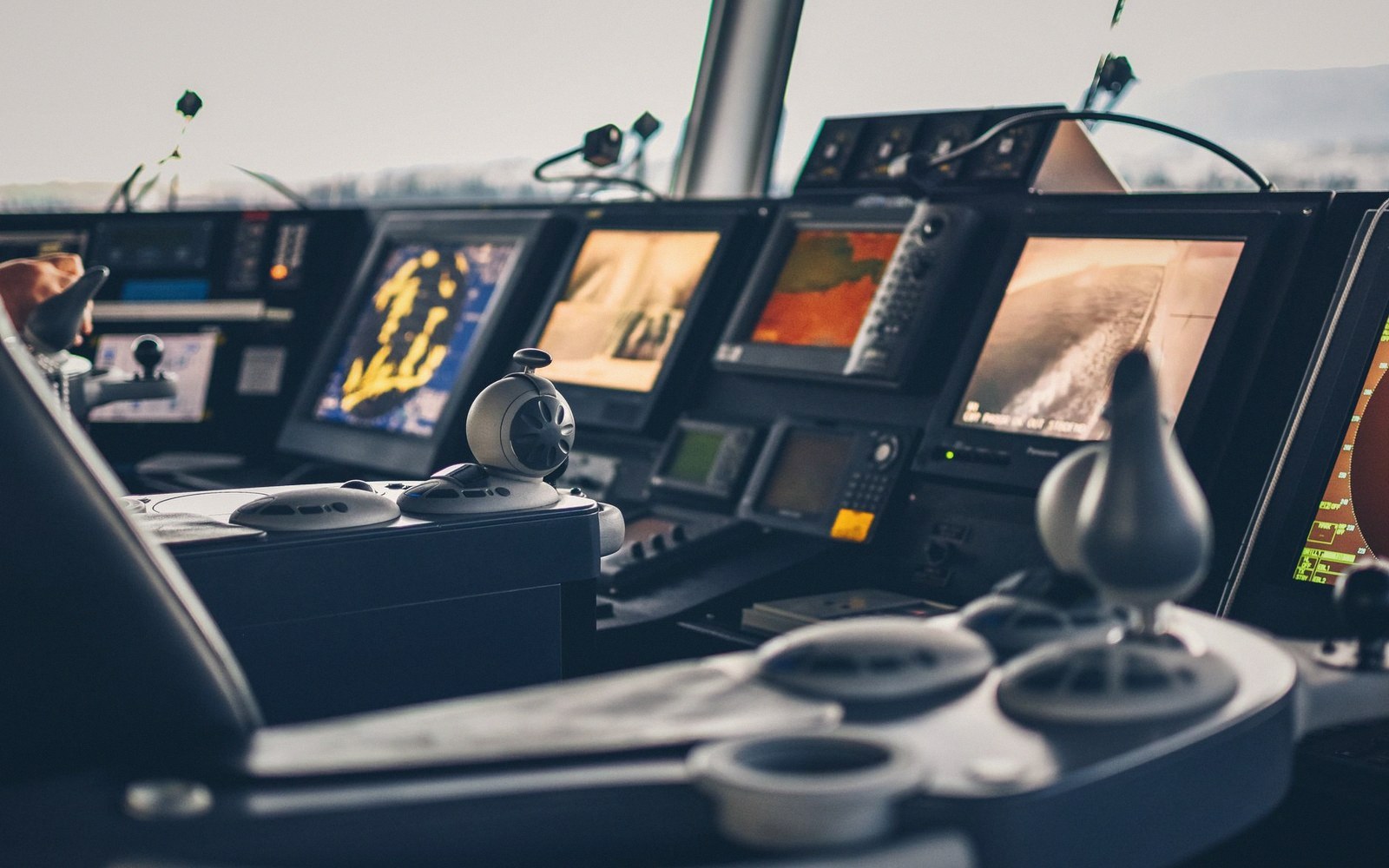
What the panels show is the working life of the ship expressed as data. Exhaust temperatures from each cylinder of the main engine. Turbocharger speeds. Lubricating oil pressure, jacket-water temperature, fuel viscosity at the point of injection. The auxiliary engines — typically three or four, running independently of the main engine to supply electrical power — each have their own display clusters. Bilge-level alarms, purifier running states, refrigeration plant temperatures for reefer cargo: all of it flows into the same room. On an Integrated Automation System, as fitted to most vessels built in recent decades, the software logs trends over time, so the engineer can see not just whether a temperature is within limits now but whether it has been drifting for the past two hours.
The watch engineer reads these patterns. A gradual rise in exhaust temperature on one cylinder unit may indicate a failing fuel injector. A drop in scavenge air pressure can point to a fouled turbocharger. The ECR does not diagnose — the engineer does, using what the panels offer. Physical inspection then follows: the engineer goes out into the machinery spaces to confirm what the numbers suggested.
The space itself is small enough that a stranger would underestimate it. A desk-height console, a chair, a telephone panel, a logbook. The glass of the console separates neat instrument labels from the wiring behind. Nothing about the room announces itself. The work it supports — keeping a ship's machinery running continuously across ocean passages that may last weeks — is entirely invisible from the outside, which is, in the end, precisely the point.