The Rota That Never Stops
At sea, a ship's bridge is never left without a qualified officer. Not at midnight, not in fog, not on the third week of a long ocean passage. This continuity is not informal diligence — it is a structural requirement built into how the day is divided, and into international law through the Standards of Training, Certification and Watchkeeping convention, known universally as STCW.
The system that makes it possible is the watch rota. On most merchant vessels, the navigating day is divided into six four-hour watches, repeating around the clock without interruption. The standard pattern assigns three officers to three pairs of watches: 0000–0400 and 1200–1600; 0400–0800 and 1600–2000; 0800–1200 and 2000–2400. Each officer works four hours, stands down for eight, then returns. The arithmetic is clean: three officers, eight hours off between each stint, full coverage at all times.
The watch that runs from midnight to four in the morning is called, in most fleets, the middle watch. The 0400–0800 slot is the morning watch, and the 2000–0000 watch is the first watch. These names are old enough to predate steam, but the underlying logic has not changed: someone with navigational authority must be present and alert on the bridge at every moment the vessel is under way.
What the Officer Actually Holds
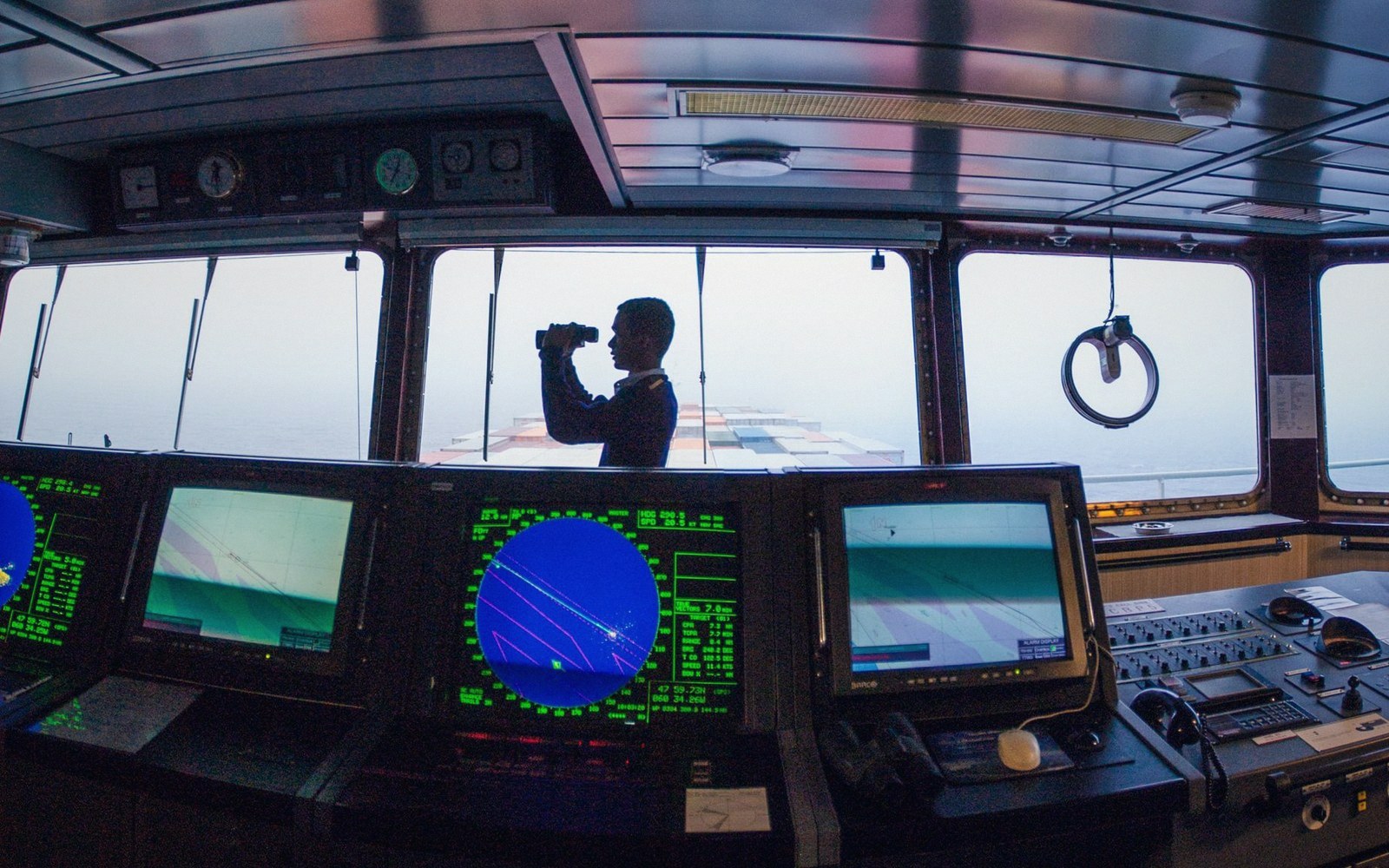
The officer of the watch — OOW — is not a lookout with a radio. During their four hours, they hold the conn, which means they are responsible for the vessel's navigation, collision avoidance and compliance with the International Regulations for Preventing Collisions at Sea (COLREGS). They monitor the radar picture, track the chart, watch the depth sounder and AIS display, maintain the deck log, and adjust course or speed as conditions require. On many ships a helmsman or an able seaman keeps a physical watch on the bridge wing or at the wheel, but the OOW is the qualified decision-maker.
The master — the ship's captain — is not on watch in the normal rotation. They sleep, eat and manage the wider business of running a vessel. But they hold what is called standing orders: a written set of instructions that define exactly when the OOW must call them. A vessel approaching a traffic separation scheme, a deterioration in visibility, an approaching vessel whose closest point of approach falls within a set distance — these are triggers written in advance, because the master cannot be present for every decision but must be reachable for the ones that exceed the OOW's standing authority.
The handover between watches is its own small ritual. The oncoming officer arrives on the bridge ten to fifteen minutes before the watch begins, reads the deck log, checks the chart, notes the traffic situation and asks about anything that has developed during the previous four hours. Only when they confirm they are ready does the outgoing officer hand over formally — a spoken acknowledgement that authority has transferred. Until that moment, the previous officer remains responsible.
Weeks of This
A deep-sea passage of three weeks means the same rota cycling roughly 126 times without pause. What this produces is not routine in the sedative sense — it is a kind of institutional vigilance, structured so that no single officer's fatigue governs the ship's safety. The eight hours off are protected time for sleep and recovery, though on a working vessel those eight hours also absorb meals, paperwork and any emergency that requires all hands.
The system also accumulates something less visible: a continuous written record. Every watch produces entries in the deck log — position, course, speed, weather, any notable event. Across a voyage, this log becomes a navigational and legal document, the ship's account of its own passage. If anything is later disputed about where the ship was or what its officers knew, the log is the primary evidence.
The four-on, eight-off pattern is the core of it, but not the whole of it. Some operators run a two-watch, six-hours-on-six-off system, particularly on shorter coastal runs. STCW sets minimum rest requirements — ten hours of rest in any twenty-four-hour period, and seventy-seven hours of rest in any seven-day period — that constrain what any rota can ask of an officer. Within those limits, the structure varies. What does not vary is the principle: the bridge is never empty, and someone qualified always holds the watch.